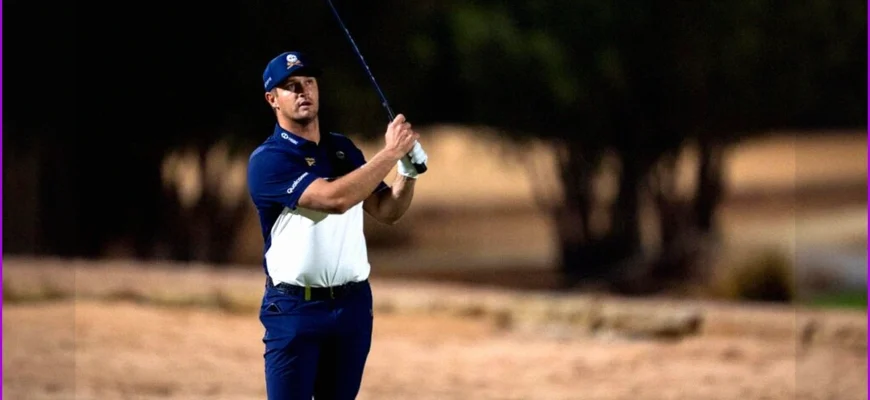
As the professional golf world remains divided with top players spread across different tours, four years have passed since the inception of LIV Golf. The league has certainly had its moments of triumph, successfully luring major talents like Dustin Johnson, Jon Rahm, Bryson DeChambeau, Phil Mickelson, and Cam Smith. It boasts a 14-event international schedule and a significant broadcast agreement with Fox Sports.
A recent highlight was the South Africa event, where DeChambeau and Rahm engaged in a thrilling playoff before an enthusiastic crowd at Steyn City. This mirrored the success of LIV’s annual event in Adelaide, showcasing the league’s ability to deliver exciting golf. Such moments underscore the critical importance for LIV to retain its roster of gifted players.
However, looking beyond these isolated successes, 2026 has brought a challenging start for LIV Golf. Five-time major winner Brooks Koepka and former Masters champion Patrick Reed both departed, with Koepka returning to the PGA Tour and Reed opting for European competition, at least for the short term.
For those who wish to see LIV Golf disappear, these developments are certainly encouraging. While outright extinction might not be imminent, these personnel losses are not just discouraging on their own; they raise significant questions about the long-term viability and appeal of LIV’s product. Understanding the true reasons behind Koepka and Reed’s exits, beyond their public statements, is key to comprehending where LIV’s potential decline might begin and end.
| LIV Golf timeline |
| June, 2022: Funded by the Public Investment Fund of Saudi Arabia, LIV Golf launches with its first-ever event at Centurion near London. Phil Mickelson, Dustin Johnson, Louis Oosthuizen, Sergio Garcia, Lee Westwood, and Ian Poulter are among those in the field |
| August, 2022: LIV Golf signs reigning Open champion Cameron Smith, shortly after signing European Ryder Cup captain Henrik Stenson |
| February, 2024: Jon Rahm begins his first season as a LIV player, signing a deal reportedly worth $450 million |
| January, 2025: LIV signs a broadcast deal with Fox Sports |
| December, 2025: Brooks Koepka applies for reinstatement to the PGA Tour and leaves LIV Golf |
| January, 2026: Patrick Reed leaves LIV Golf and vows to rejoin the PGA Tour in 2027 |
Is LIV Golf headed in the wrong direction?
The natural conclusion of contracts
Koepka left LIV with a year remaining on his contract, while Reed departed after his deal expired and extension talks faltered. Just like in any professional sport, contracts naturally define the duration of an athlete’s association with a team or league. There’s no reason to believe this won’t happen with other LIV players as their agreements conclude.
Long-term contracts are a relatively new concept in golf, unlike the PGA Tour and DP World Tour where membership criteria dictates playing eligibility. Bryson DeChambeau, arguably one of LIV’s biggest draws, is under contract until 2026. Next year, LIV could find itself in a similar predicament, trying to secure a player who might reconsider his options after seeing Koepka and Reed’s moves.
The exact end date of Jon Rahm’s deal remains unclear, with some reports suggesting it could extend to 2029. This extended commitment might become a daunting prospect for the two-time major winner, especially if more of his fellow “rebel” golfers choose to depart.
A perceived lack of competitive drive
A frequent criticism leveled against LIV Golfers is that they have financially “checked out,” prioritizing large signing bonuses from the PIF over competitive intensity.
Patrick Reed’s comments to ESPN after winning the Dubai Desert Classic and confirming his PGA Tour return lend significant weight to this theory: “After winning, I realized just how much I missed the grind and the dogfight; that’s who I am.”
This statement was a considerable blow to LIV Golf’s narrative, which aims to portray its players as fiercely competitive and focused on winning as if in a major. Reed’s words suggest otherwise, indicating that both he and Koepka likely perceive the PGA Tour as offering a more robust competitive environment.
The Scottie Scheffler factor
Building on the point about competitiveness, it’s plausible that players like Koepka, Reed, Rahm, and DeChambeau ultimately prefer to test their skills against Scottie Scheffler, rather than participate exclusively in LIV events.
Scheffler clinched his 20th PGA Tour trophy at the Amex in January, solidifying his status as the world’s top player and drawing comparisons to Tiger Woods. He has impressively won four majors during LIV’s existence.
While winning a LIV event is commendable, it doesn’t carry the same weight as defeating Scheffler and other PGA Tour titans like Rory McIlroy, Ludvig Aberg, and Xander Schauffele. Rahm had a taste of direct competition with Scheffler at last year’s PGA Championship but ultimately fell short. There must be a lingering question among LIV’s top stars about the true measure of their game when they aren’t consistently competing against the sport’s dominant figure – an opportunity they previously had but chose to forgo.

A new era on the PGA Tour
Jay Monahan’s tumultuous tenure as PGA Tour commissioner concluded in 2025, with Brian Rolapp stepping into the role. Monahan’s leadership was marked by the civil war with LIV Golf, which deeply impacted the professional game – a situation he arguably contributed to. He even took a sabbatical to manage the immense pressure.
Before LIV’s launch, Monahan and the PGA Tour had initially dismissed engagement with the Saudis. In retrospect, even a single conversation might have altered outcomes or prevented the subsequent upheaval. While the Tour maintained a static schedule for years, LIV’s arrival profoundly disrupted the status quo.
After a year of intense hostility, Monahan and PIF governor Yasir Al-Rumayyan made a televised announcement on June 6, 2023, declaring a framework agreement or peace deal.
Despite this, the framework agreement ultimately failed. However, LIV’s emergence did force the PGA Tour to implement significant changes: substantial increases in prize money, a new Signature Event structure, and a $3 billion equity deal with a sports investment consortium. LIV and its supporters claimed victory, arguing that its presence compelled necessary, albeit overdue, reforms. They had a valid point.
Now, the reactive Monahan has been succeeded by the proactive Rolapp. Less than a year into his term, there are already plans to restructure the PGA Tour schedule into two divisions, aiming to maximize the significance of tournaments and eliminate less impactful ones.
Rolapp is focused on creating a highly competitive product, exemplified by the introduction of the “Returning Member” category. This initiative invited major winners since 2022, including Koepka, Rahm, DeChambeau, and Cameron Smith, back to the PGA Tour. Koepka seized this opportunity, while the others opted to stay with LIV. Rolapp’s strategy clearly identifies which LIV players are seen as beneficial to the Tour’s circuit.
Whether Koepka and Reed were swayed by Rolapp’s vision is unknown, but it’s clear the new PGA Tour management is committed to aggressive reform.
What is the endgame for LIV Golf?
With a clear path now established for players to return to the PGA Tour, LIV finds itself in a precarious position. Just as some players initially observed their peers join LIV before planning their own defections, now players contemplating a return to the PGA Tour have a precedent to follow.
The departure of key figures like Rahm and DeChambeau would be catastrophic for LIV. While they currently hold strong bargaining power to negotiate better contracts from the PIF, the allure of the PGA Tour might grow so strong that a switch becomes inevitable.
The question of how much more the PIF is prepared to invest, beyond the estimated $6 billion already spent over LIV’s first four seasons, looms large. Media reports increasingly highlight the sovereign wealth fund’s other priorities, such as the astronomical costs of the ambitious Neom project, among others.
While it might be simplistic to predict LIV’s eventual demise, the league has made positive strides, such as securing world ranking points for its events.
My conservative, yet likely accurate, prediction is that LIV will remain much as it is next year. A more pessimistic outlook from the Saudi perspective would be the departure of Rahm and DeChambeau, a scenario that is certainly plausible.
In the long term, my vague prediction is that LIV will evolve into a tour comparable in quality to the DP World Tour or the Asian Tour, hosting events globally with solid, but not elite, fields of players.