
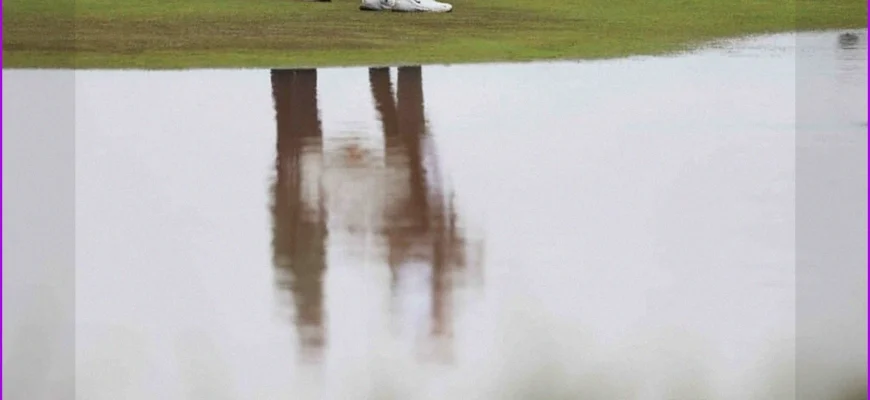
Golf courses across the UK are facing unprecedented challenges. After one of the wettest winters on record, fairways are bare, turf is waterlogged, and many areas resemble a muddy battlefield. Despite these conditions, the golf competition season is about to kick off, often in late March or early April.
This isn’t an isolated incident; recent winters have seen record rainfall, making course preparation for traditional early starts increasingly difficult. Greenkeepers, despite their best efforts, are not miracle workers. They struggle to deliver the desired playing surfaces when the weather consistently works against them, with forecasts often predicting continued rain well into spring.
The consequences for players are evident: courses are often far from ideal, relying heavily on preferred lies and temporary ground under repair rules. The abrupt transition from shorter winter layouts to full-length competition courses can be a shock, with players facing an unprepared landscape.
This issue is not new. As Jim Croxton, CEO of the British & International Golf Greenkeepers’ Association, noted previously, there’s an “obsession with getting ready for a March opening day, or definitely by the first of April.” He suggests the golf season truly arrives “at least Easter and probably more into May,” but clubs often prioritize tradition over readiness.
It’s time for a fundamental shift: we need to move the start of the golf competition season. Why not begin in May?
This delay would offer numerous benefits. Course managers would gain an additional four to five weeks – 30 crucial days – for conditions to improve. Days would be longer and warmer, allowing aerated greens to knit and saturated ground to dry out naturally. This would significantly reduce stress on greenkeepers and result in much better playing surfaces for competitive golf.
Many greenkeepers agree, admitting that early season events are often scheduled too soon for optimal course conditions. Players, too, share this sentiment, experiencing less than ideal environments.
Furthermore, while traditional schedules often see the competition season winding down, October frequently offers excellent playing conditions, acting as a “virtual extension of summer.” By shifting the start, clubs could extend the season into this often underutilized month, providing a better overall experience.
Adapting the golf calendar to reflect modern climate realities is not just a suggestion; it’s a necessity. It promises better conditions for players, less strain on greenkeeping staff, and a more enjoyable competition experience for everyone.