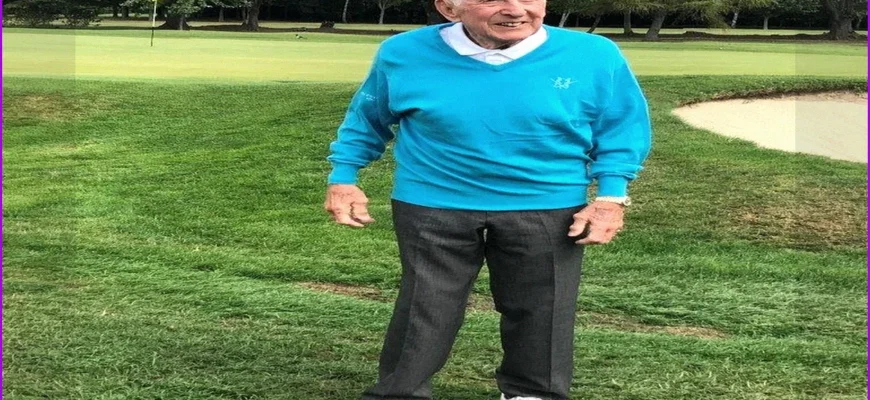

Olympic champion Ronnie Delany at his beloved Foxrock Golf Club in 2018
Ronnie Delany, the legendary Irish Olympic champion, passed away yesterday at the age of 91. His gold medal performance in the 1500 metres at the 1956 Melbourne Olympic Games remains one of Ireland’s most celebrated sporting achievements. Beyond the track, however, he held a unique golfing accomplishment – scoring a ‘two’ on what’s considered the world’s shortest par-five – as one of his proudest moments.
- Handicap: 26
- Club: Foxrock Golf Club
- 1. How’s your golf these days?
- 2. How did you first get into the game?
- 3. When did you start playing seriously?
- 4. Choose your weapon: Driver or Putter?
- 5. What’s your favourite par three?
- 6. Links or Parkland?
- 7. Who would make up your dream fourball?
- 8. What would he add to the day?
- 9. All three are winners. You admire that, clearly.
- 10. What defines a winner?
- 11. Who did you admire in your sport?
- 12. It was a lovely era for writers, too, wasn’t it?
- 13. If I gave you a mulligan in your professional career, what would it be?
- 14. Which race taught you the most about winning?
- 15. As a champion, who do you admire in golf now?
- 16. What’s your most treasured possession?
- 17. If you could change something about your golf, what would it be?
- 18. What’s your greatest pleasure in golf?
- 19. What’s your abiding memory of winning the Olympic gold in Melbourne?
- 20. The memory of glory:
Handicap: 26
Club: Foxrock Golf Club
1. How’s your golf these days?
Due to recent challenges with arthritis in my right hand, which limits the flexibility of two fingers, I haven’t been able to play golf as often as I’d like. It’s not for a lack of love for the game; I’m actively working to regain that flexibility.
2. How did you first get into the game?
My introduction to golf began during my time at Villanova University in Philadelphia, where I was on a full track scholarship. Caddying was a crucial source of income then. I’d run out to nearby clubs like Aronimink, Merion, and Overbrook – where my coach Jumbo Elliott played off scratch – often carrying two bags. This rigorous caddying inadvertently built my physical strength. Back then, we were paid $6 for two bags and got a hamburger or hot dog at the ninth hole. While I never became a skilled golfer, my ability to accurately judge distances was a great asset for caddying.
3. When did you start playing seriously?
I couldn’t dedicate much time to golf during my athletics career. It wasn’t until my mid-fifties that I truly embraced it, joining Kilternan Golf Club, which I absolutely adored. My “bad technique” meant the hilly terrain made little difference to my game!
4. Choose your weapon: Driver or Putter?
Definitely the putter. With the driver, I could end up anywhere but the fairway. So, par threes have always been my preferred holes.
5. What’s your favourite par three?
The fifth at Foxrock is a beautiful hole. I also have a complex, love-hate relationship with the par-four seventh there; I could never quite master it.
6. Links or Parkland?
I lean towards parkland golf, having had the opportunity to play many lovely courses like Foxrock, Milltown, Elm Park, and Castle. It’s a pity they have so many trees, though aesthetically, the trees at my home club, Foxrock, must be among the most stunning of any club I’ve ever played. I have fond memories of rounds with Bill O’Herlihy, a wonderful member and former President, may he rest in peace.
7. Who would make up your dream fourball?
My ideal fourball would include Justin Rose, for his triumphs at the US Open at Merion and his Olympic gold. Pádraig Harrington would join him; I’ve always admired his relentless positivity, intense focus, and how he genuinely embraced the Olympic spirit in Rio. The fourth spot goes to Jimmy Connors, with whom I had the pleasure of playing at Royal Dublin. He was a left-handed tennis player but a right-handed golfer with an incredibly strong left arm. He played off a 14 handicap and was two-over on the front nine because he was excellent at listening to advice. Coming home into the wind, reality kicked in, and he finished 12-over. But what a joy it was to play with him!
8. What would he add to the day?
I think Connors’ competitive spirit would spark a fantastic dynamic with Harrington, and the ‘craic’ (fun) would be mighty! Justin’s Olympic achievement also resonates deeply with me, affirming that ‘once an Olympian, always an Olympian.’ Pádraig’s sincere appreciation for the Olympics was particularly moving.
9. All three are winners. You admire that, clearly.
Indeed, I too was a dedicated winner. I enjoyed an unbroken five-year streak, winning 43 races – including 33 miles – and setting three indoor mile world records. I naturally gravitate towards those with a winning mentality, and Jimmy Connors epitomized that.
10. What defines a winner?
A winner is defined by unwavering focus and a fierce competitive drive – a profound aversion to losing. Interestingly, many great athletes I’ve known, myself included, often recall their defeats more vividly than their victories. Losses are indelible; wins tend to blur. I’m sure Jimmy Connors remembers losing to Arthur Ashe in 1975, just as I remember every time I lost, while my wins are harder to recall.
11. Who did you admire in your sport?
My era was different; admiration was less about looking up and more about looking across at rivals who became friends. I’m still in touch with many of them today, like John Landy, whose home I called recently, and Brian Hewson, who raced me in Dublin. I can go through that Olympic field, and most of us are still around and in communication. It wasn’t that I admired them; I wanted to beat them. And then we’d be friends afterwards.
12. It was a lovely era for writers, too, wasn’t it?
Absolutely. There were great writers like Tom Cryan, Peter Byrne, and AP McWeeney, who was at the Olympics. David Guiney, a shot putter and a ’48 Olympian, was also a lovely man and a close friend throughout our lives.
13. If I gave you a mulligan in your professional career, what would it be?
That would be unjust because any time I was beaten, I was beaten fair and square. I never sought excuses; I understood the reasons behind both my wins and my losses.
14. Which race taught you the most about winning?
As an innate winner, the core principle was always to win the race. While one certainly learns from mistakes, the drive to win felt intrinsic to my nature.
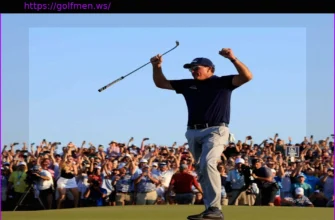
15. As a champion, who do you admire in golf now?
Among contemporary golfers, Phil Mickelson stands out. His enduring athleticism and fierce competitiveness are truly admirable.
16. What’s your most treasured possession?
Beyond a hole-in-one at Kilternan, I vividly recall scoring a ‘two’ on the 15th at Portmarnock, often described as the world’s shortest par-five, for which I received a special prize that day. I’m proud of that, too. Yet, ultimately, my most cherished ‘trophies’ are my memories.
17. If you could change something about your golf, what would it be?
My one regret is not starting golf in my twenties instead of my fifties. I often wish my athletics coach, Jumbo Elliott, a scratch golfer himself, could have guided me; he might have honed my game into something truly competitive.
18. What’s your greatest pleasure in golf?
Being honoured with an invitation to become an honorary member of Foxrock Golf Club. I am immensely proud to be a part of it.
19. What’s your abiding memory of winning the Olympic gold in Melbourne?
My most enduring memory harks back to my time with coach Brutus Hamilton at the University of California for a week, as a stopover on the journey to Australia. Brutus had me practice running *through* a string across the track. Afterwards, he put his arms around my shoulders and said, ‘Now, son, we have practised everything.’
20. The memory of glory:
That memory culminates in crossing the finish line, breasting the tape and throwing my arms out wide in absolute ecstasy, knowing I had won the Olympics.