
Betting on golf can be an intricate, thrilling, and sometimes frustrating endeavor—much like facing a crucial three-foot putt with everyone watching. While countless ways exist to wager on a golf tournament, simply betting on outright winners at random is a swift path to a financial “bunker.”
Instead, follow this comprehensive guide to strategically build your betting card, carefully balancing risk and potential rewards to ensure you remain competitive and profitable throughout the tournament weekend.
Three essential elements frequently influence golf betting decisions: course suitability, a player`s current performance, and their historical results at the specific course.
-
Course Suitability: This considers how well a golfer`s playing style matches the course`s design. Is it a long-hitter`s dream, a layout demanding pinpoint accuracy, or a test primarily decided on the greens?
-
Current Performance: This examines a player`s recent tournament outcomes, momentum, and self-assurance. A golfer who was consistently striking the ball well last week is generally a more attractive bet than one struggling to find their rhythm.
-
Course History: This reflects a player`s comfort level and past success at a particular venue, whether due to a preference for the grass type or positive memories from previous events. The ideal scenario is when all three factors align. However, successful betting often involves identifying the best value, which sometimes means prioritizing one factor over the others to gain an advantage.
- Understanding Your Golf Betting Options
- Outright Winner
- Top-5, Top-10, and Top-20 Finishes
- First-Round Leader
- Head-to-Head Matchups
- Props and Major-Specific Markets
- Crafting Your Betting Card and Managing Bet Sizes
- Major Tournaments in Golf: The Four Majors and the “Fifth Major”
- Expert Picks for the 2025 Open Championship
- My Top Betting Selections
- Rory McIlroy Top 10 (-105)
- Tommy Fleetwood Top 20 (+130)
- Matt Fitzpatrick Top 20 (+210)
- Jon Rahm Top 20 (+130)
Understanding Your Golf Betting Options
Golf wagering extends far beyond simply predicting the winner. Numerous betting avenues are available, some carrying more risk than others. By structuring your wagers effectively, you can still secure profits even if your primary pick doesn`t clinch the victory. Here’s a concise overview of the most popular bet types:
Outright Winner
This is the classic bet: “Who will lift the trophy on Sunday?” Given the large fields in golf tournaments, outright winner odds are often very appealing, but this also means they are notoriously difficult to hit. A winning ticket at 30-1 is exciting, but relying solely on outright winners can quickly deplete your bankroll, leaving it as bare as the rough at a U.S. Open.
Top-5, Top-10, and Top-20 Finishes
These represent more cautious betting options, with top-20 bets offering the highest probability of success. Instead of needing a golfer to win, they only need to finish within a specified ranking. While a top-20 bet at +120 might not seem thrilling, consistently hitting these wagers can sustain your bankroll while you strategically place smaller bets on outright winners.
Consider the difference: a golfer at 30-1 to win has an implied probability of 3.2%. Compare that to a top-20 bet at +200, which implies a 33% probability—a significant contrast. This is why it’s prudent to wager less on longer odds and more on higher-probability outcomes.
First-Round Leader
This bet adds an immediate thrill. You only need your chosen golfer to be leading after 18 holes, rather than tracking them for four days. Since first-round leader odds are frequently 20-1 or longer, I recommend betting these in fractions of your standard unit. Key factors for this bet include early tee times, calm weather conditions, and players known for aggressive scoring. If you believe a player has the potential to win the tournament, it’s certainly worth risking a small amount on them starting strong in the opening round. If it pays off, you could essentially be playing the rest of your card with house money.
Head-to-Head Matchups
If betting on outright winners is like attempting a risky shot to the pin, matchup bets are akin to a safe chip onto the green. You simply choose one golfer to perform better than another, either for a single round or across the entire tournament. This offers a more controlled betting experience. I prefer full-tournament matchups, as they reflect a broader performance over four days, reducing the volatility associated with single-round outcomes. Three-ball matchups also exist, involving three players instead of two, offering longer odds but also increased risk.
Props and Major-Specific Markets
Major championships bring forth a diverse selection of unique and exciting bets. Some of these are available weekly, while others are exclusive to the year`s biggest tournaments:
-
Top American, Top European, etc.: Betting on the highest finisher from a specific geographical region.
-
Will there be a hole-in-one?: A straightforward and always tempting wager.
-
Lowest round, highest round: Predicting if a player will post an exceptionally low score (like Cam Smith`s -8 at St. Andrews) or a very high one in challenging conditions.
-
Make the cut parlays: Combining several players to successfully make the cut line.
Crafting Your Betting Card and Managing Bet Sizes
Randomly placing bets and hoping for a win is not a strategy; it`s a quick way to run out of funds before the weekend. Moreover, if you are wagering the same amount on every bet, you are effectively using a putter from the fairway – it`s inefficient. Instead, I suggest building your betting card around two or three key players, incorporating various bet types to achieve a balance between risk and reward. Because golf odds fluctuate significantly, your bet sizing should be proportionate to the inherent risk.
This approach works well because top-20 bets offer consistency, cashing more frequently and stabilizing your bankroll. Wagers for top-10 and top-5 finishes might be allocated 0.5 units, while outright winner bets could range from 0.2 to 0.25 units due to their lower probability of success. First-round leader bets carry even higher risk but also high reward, offering a chance for a significant win with smaller bet sizes. Distributing your bets across different markets keeps you engaged throughout the tournament. Even if your outright pick falters, your top-20 bet might still pay off. Remember, the longer the odds, the smaller your bet size should be, as the implied probability of winning is much lower. Betting too heavily on long shots can lead to rapid bankroll depletion during a losing streak.
If you are backing multiple players (five or more) in a single event, your total stake needs to be carefully managed to avoid over-exposure on any individual golfer. As you add more players, adjust individual bet sizes accordingly to maintain overall exposure within reasonable limits.
Major Tournaments in Golf: The Four Majors and the “Fifth Major”
Much like any form of wagering, successful golf betting requires discipline. It serves as a way to enrich your viewing experience. Golf betting can be a demanding pursuit; if you expect to hit an outright winner every week, you`re likely in for disappointment. However, by strategically structuring your bets, meticulously managing risk, and diversifying your exposure across various markets, you can maintain profitability and keep the excitement alive all weekend long.
Here are some recent major results:
- The Open Championship (2025): July 17-20, Royal Portrush (Northern Ireland)
- U.S. Open: J.J. Spaun (-1)
- PGA Championship: Scottie Scheffler (-11)
- Masters Tournament: Rory McIlroy (-11, won in playoff)
The Players Championship: Rory McIlroy (-12, won in playoff)
With one of the strongest fields, a substantial prize purse, and TPC Sawgrass as its iconic setting, The Players Championship comes as close to a major as possible. While it doesn`t hold the official major label, its drama, rich history, and the notorious island green at the 17th hole make it one of the year`s premier tournaments.
Expert Picks for the 2025 Open Championship
The PGA`s final major of the year is scheduled for this week in Northern Ireland. The Open, held at Royal Portrush, is not a course designed for “bomb-and-gouge” play. Instead, it’s a strategist`s paradise, favoring precision from the tee, controlled ball flights, and imaginative play around the greens. Golfers will need to shape shots skillfully in the wind, navigate challenging lies, and maintain composure when scoring becomes difficult.
The winning score in 2019 was minus-15, largely due to Shane Lowry`s exceptional performance over the first three rounds. By Sunday, the weather turned severe, making par an excellent score. So, while a low score is achievable, it`s not typically a birdie-fest. This course is one where the wind can drastically alter conditions daily, and the ability to remain consistent through changing weather is often the decisive factor.
Key performance indicators for this tournament include strokes gained from tee to green, scrambling ability, and proven performance in windy conditions. Length off the tee is less crucial than discipline and experience on links courses. Here are four players I believe are strong contenders this week.
My Top Betting Selections
Rory McIlroy Top 10 (-105)
If local connections are a factor, McIlroy, with his Northern Irish roots, certainly has an edge. However, this pick isn`t solely based on narrative; it`s strongly supported by data. His game is exceptionally well-suited for Royal Portrush. He ranks fifth on tour for strokes gained from tee-to-green, having gained over eight strokes in each of his last three tournaments, including a remarkable gain of over 13 strokes at last week`s Scottish Open.
At Portrush, where raw power is secondary, this consistent level of ball-striking directly translates into lower scores. If he maintains this form, he won`t need to rely on a hot putter, as he`ll frequently find himself in prime birdie-making positions and skillfully avoid the hazards that plague other players.
No other player in the field combines recent form, course familiarity, and links pedigree quite like Rory. While a top-five finish at +170 is tempting, it offers only an additional 75 cents of value for significantly higher risk. Opt for the more stable edge to protect your return on investment.
Tommy Fleetwood Top 20 (+130)
In 2019, Portrush favored control, patience, and creative shot-making—qualities that define Fleetwood`s game. He currently ranks 8th in approach play, 11th around the green, and 3rd in scrambling, which are precisely the skills needed to excel on a demanding links course.
He secured a runner-up finish here in 2019 and has accumulated nine top-20 finishes in 15 starts this season. Fleetwood doesn`t depend on inconsistent putting or sheer power; his game is complete. He consistently positions the ball effectively and scrambles proficiently when necessary.
While not flashy, his consistent profile is highly effective and well-suited for the unpredictable nature of windy links golf. He is still chasing his first win on U.S. soil or in a major, but this week could very well be his breakthrough.
Matt Fitzpatrick Top 20 (+210)
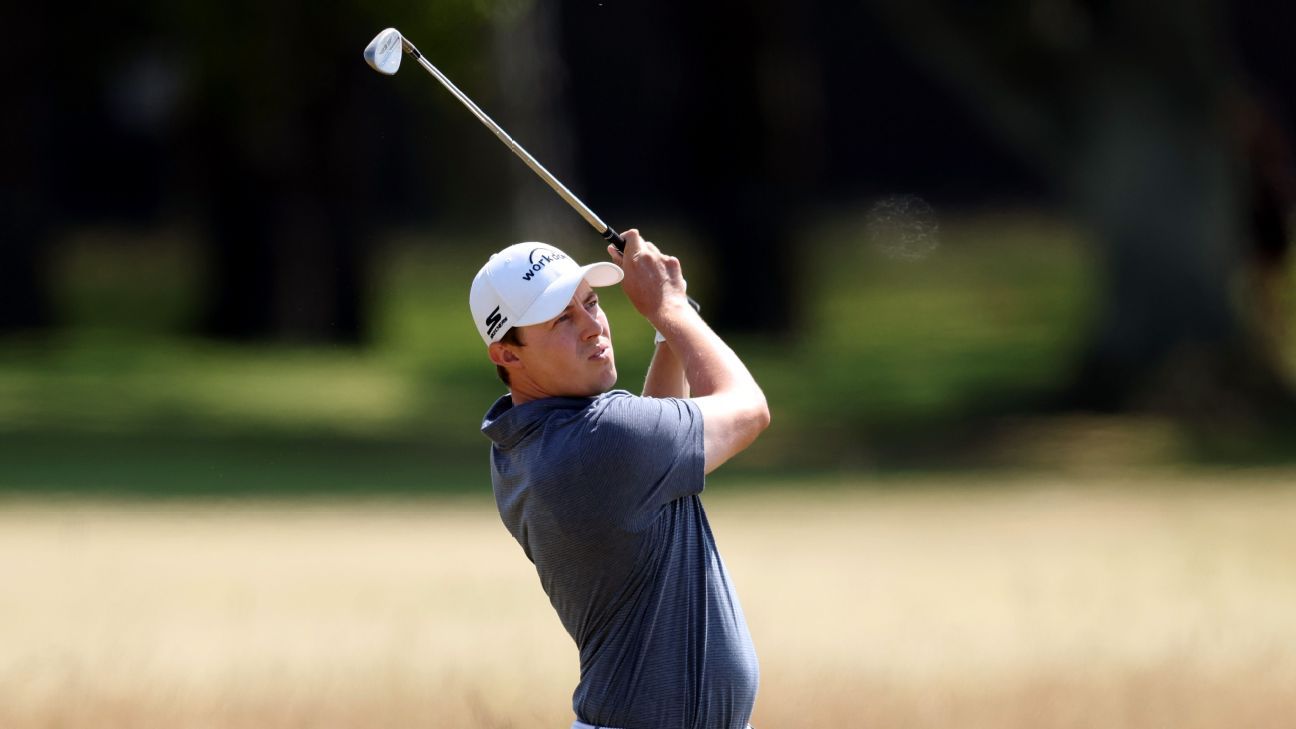
This selection is about timing—a “heat check” on a player hitting peak form at the opportune moment. Fitzpatrick is coming off two consecutive top-10 finishes, including a tie for fourth at the Scottish Open, where he gained over 10 strokes tee to green and nearly seven strokes putting. That`s the ideal combination. And the Scottish Open course? It`s a wind-exposed, firm layout, quite similar to what he`ll encounter at Portrush.
I prefer golfers who meticulously strategize their way around this course, rather than trying to overpower it. Fitzpatrick doesn`t rely on brute force; he dissects courses with precision. With his links background, elite short game touch, and improving ball-striking, he`s a strong candidate.
Jon Rahm Top 20 (+130)
If Rory McIlroy doesn`t contend, Jon Rahm very well could. He finished T11 here in 2019 and has since achieved three top-10 finishes in The Open. His 2025 major season resume indicates he`s building towards a significant performance, and Royal Portrush could be where it happens. He`s finished T14, T8, and T7 in the three majors this year, gaining over 11 strokes tee to green at the U.S. Open and nearly 10 total strokes at the PGA Championship.
His iron play has recently sharpened. Even when his putting isn`t at its best, he still manages to climb the leaderboard. This is the winning formula for The Open: exceptional ball-striking, masterful control in challenging conditions, and strong mental resilience. If his putter performs even moderately well, Rahm will be right in the mix.